
Authored Article: Powering India’s Renewable Future: Innovation & Rise of Domestic Manufacturing
Source: Responsible us
Article: Powering India’s Renewable Future: Innovation & Rise of Domestic Manufacturing
Published on: August 17, 2026
Published By: Anuj Agarwal
Article: Powering India’s Renewable Future: Innovation & Rise of Domestic Manufacturing
Published on: August 17, 2026
Published By: Anuj Agarwal
Sustained policy support and collaboration among industry, government, academia and technology providers will be key to strengthening energy security and making India a global clean energy hub
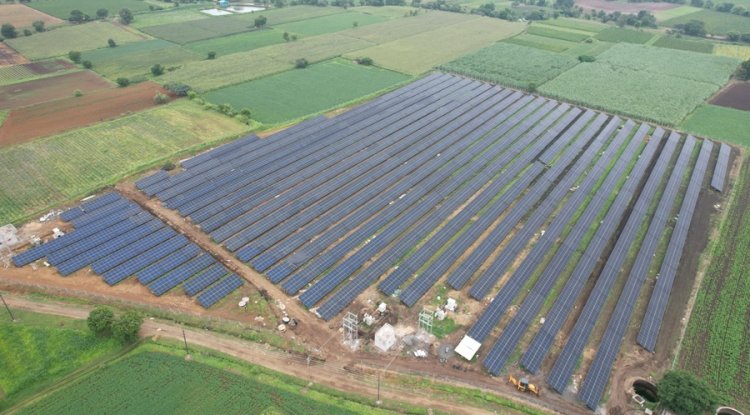
India’s renewable energy journey has entered a defining phase. The conversation is no longer centred only on expanding solar and wind capacity; it is about building a resilient ecosystem that strengthens energy security, supports sustainable economic growth and positions India as a global leader in Renewable energy. The advancement stage of this transformation does not only depend on huge capacity expansion but also on advances in technology, engineering achievements, local production technologies, and consistent government support.
India has already established itself as one of the main renewable energy markets due to smart measures and growing interest from private companies. Yet India’s clean energy transition presents challenges unique to its geography and demographics. As the world’s seventh-largest country by land area but the most populous nation, land availability for large-scale solar installations is increasingly constrained. At the same time, rapidly rising energy demand requires renewable energy projects to be deployed faster and more efficiently.
India’s climate also demands solutions tailored to local realities. Harsh summer temperatures can reduce solar panel efficiency during peak sunlight hours, underscoring the need for technologies designed specifically for Indian conditions. The sector’s future success will therefore depend on adapting global best practices while developing engineering solutions suited to India’s geographical, climatic and economic environment.
For many years, imported technologies and components have helped accelerate renewable energy deployment. While this has enabled rapid capacity expansion, the next phase must focus on building stronger domestic capabilities across the value chain. This means not only manufacturing more components within India but also developing innovative project models and technologies that improve efficiency, optimise project economics and strengthen long-term energy security.
India is well on the way towards achieving its goals as the Government already has a solid policy in place for this purpose. The introduction of initiatives such as PM Surya Ghar is aiding in the speedy implementation of rooftop solar systems whereas floating solar initiatives are paving the way for new possibilities where land is concerned.
Policy support alone, however, is not enough. Indian Independent Power Producers (IPPs) must continue to differentiate themselves through speed of execution, superior engineering, procurement and construction (EPC) capabilities, efficient project management and consistent operational excellence. Innovation should extend beyond technology to include better project execution, smarter asset management and adapting global practices to India’s operating conditions to maximise power generation and long-term performance.
In the course of transforming renewable energy in the future, technology will equally be of paramount importance. AI, predictive analytics, digital monitoring systems and advanced forecasting are already increasing efficiency of solar plants and lowering operating costs. As renewable energy will account for an increasing share of India’s electricity mix, investments in energy storage, new transmission infrastructure and smart grid management will gain more and more significance in making sure that the grid remains stable and reliable.
Building a globally competitive renewable energy ecosystem will require close collaboration across the value chain. Independent Power Producers, solar module manufacturers, EPC companies, technology providers, policymakers and research institutions must work together to accelerate innovation and improve project efficiency. Stronger partnerships between industry, academia and government research institutions can help develop technologies tailored to India’s environmental and operational realities. The long-term vision should be to move beyond importing renewable energy technologies and become a global provider of innovative, India-developed solutions.
Renewable energy is not only an environmental imperative but also a powerful driver of economic development. Investments across the sector create opportunities in engineering, manufacturing, infrastructure, technology and financial services while reducing dependence on imported fuels, strengthening energy security and supporting India’s climate commitments.
The Government has taken the lead by creating a supportive policy framework, and it is now time for Indian corporates to build on this strong foundation. India’s renewable energy story isn’t just about the next few years — it’s a much bigger, longer journey. As the country’s electricity needs keep growing and it moves towards a cleaner, low-carbon future, businesses need to think long-term. They’ll have to execute projects quickly and carefully, while building solutions that actually fit India’s unique needs — all while keeping communities, the environment, power distribution companies, and everyday consumers in mind.
If we can bring together fresh ideas, strong engineering, real teamwork, and consistent policy support, India can secure its energy future, give its industries a real competitive edge, and become one of the world’s leading players in the clean energy space.